
Planning a wedding is one of the most exciting experiences for a couple, but it can also feel overwhelming. From selecting the perfect venue and managing a budget to choosing vendors, sending invitations, and coordinating the wedding day, there are many details to consider.
A clear Wedding Planning Guide can make the entire process more organized and enjoyable.
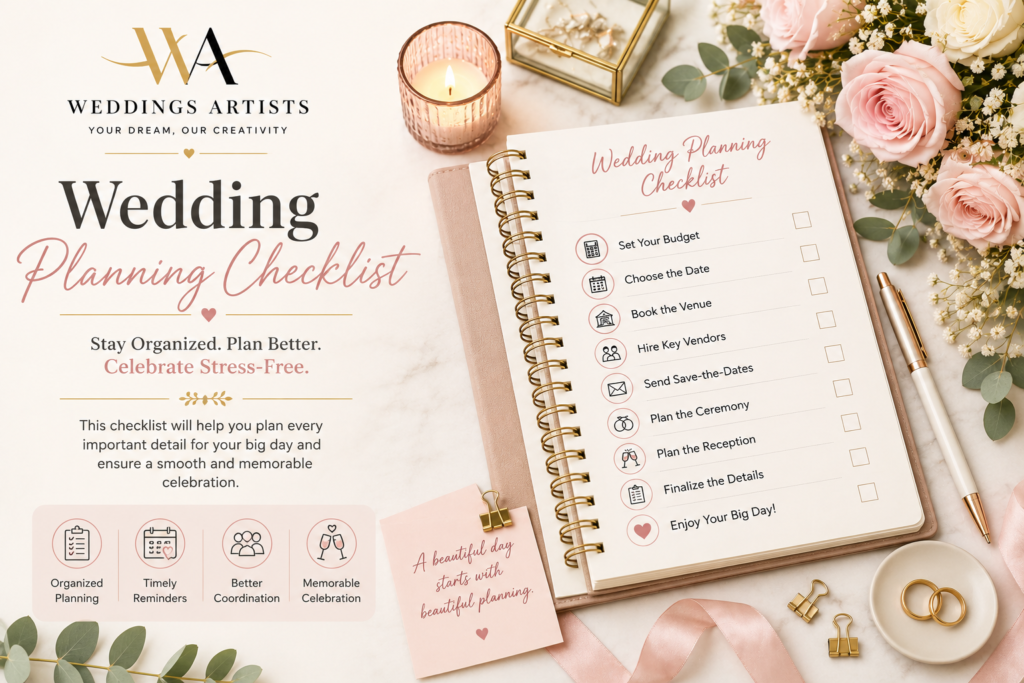
Whether you are planning an intimate celebration, a destination wedding, or a large formal event, having a structured Wedding Checklist helps you stay on track and ensures important tasks are not overlooked.
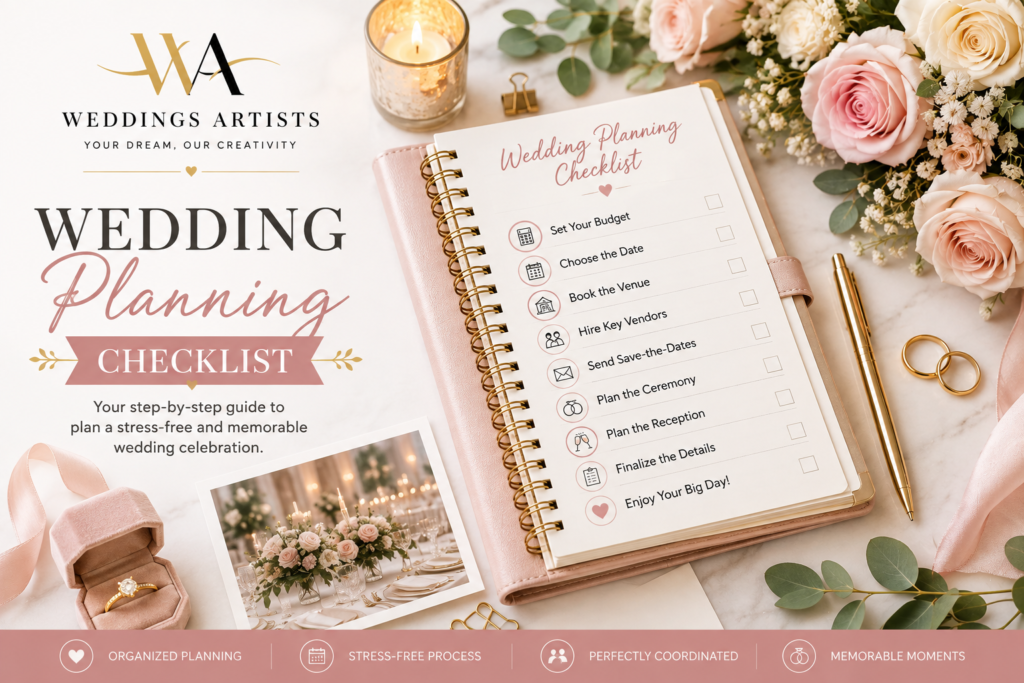
This step-by-step guide explains How to Plan a Wedding, from the first stages of setting your vision to the final details before walking down the aisle.
Why Do You Need a Wedding Planning Checklist?
A wedding involves many moving parts. Without proper organization, it can be easy to miss deadlines, overspend, or feel stressed by last-minute decisions.
A structured Wedding Checklist helps couples:
- Stay organized throughout the planning process
- Manage important deadlines
- Set clear priorities
- Track wedding expenses
- Coordinate with vendors
- Plan the guest experience
- Reduce last-minute stress
- Enjoy the journey leading up to the wedding
The key is to break the planning process into manageable stages rather than trying to organize everything at once.
Step 1: Define Your Wedding Vision
Before booking a venue or contacting vendors, take time to discuss your vision as a couple.
Think about the type of celebration you want to create.
Ask yourselves:
- Do we want a large or intimate wedding?
- What style represents us best?
- Do we prefer a traditional or modern celebration?
- Would we like a destination wedding?
- What type of guest experience do we want?
- Which wedding details are most important to us?
Your answers will help guide future decisions.
Choose Your Wedding Style
Your wedding style can influence everything from the venue to the décor.
Popular styles include:
- Classic and elegant
- Modern and contemporary
- Romantic
- Rustic
- Minimalist
- Garden-inspired
- Luxury
- Cultural or traditional
Creating an inspiration board can help organize your ideas and identify the design elements you love most.
Step 2: Set Your Wedding Budget
One of the first practical steps in How to Plan a Wedding is establishing a realistic budget.
Your budget will influence many decisions, including:
- Venue selection
- Guest count
- Catering
- Photography
- Entertainment
- Wedding décor
- Floral arrangements
- Attire
Start by identifying your overall budget and then divide it into categories.
Example Wedding Budget Categories
| Category | Planning Consideration |
|---|---|
| Venue | Ceremony and reception space |
| Catering | Food and beverages |
| Photography | Wedding photography and videography |
| Decoration | Flowers, furniture, lighting |
| Entertainment | DJ, band, performers |
| Attire | Wedding outfits and accessories |
| Stationery | Invitations and signage |
| Transportation | Couple and guest logistics |
Keep some flexibility in your budget for unexpected expenses.
Step 3: Create Your Guest List
Your guest count plays an important role in wedding planning.
The number of guests can affect:
- Venue capacity
- Catering costs
- Seating arrangements
- Invitation requirements
- Transportation
- Overall budget
Start by creating a preliminary list.
You can divide guests into categories such as:
- Immediate family
- Extended family
- Close friends
- Colleagues
- Additional guests
Once you have an estimated number, it becomes easier to select an appropriate venue.
Step 4: Choose Your Wedding Date
Selecting a wedding date is an important milestone.
Consider:
- Venue availability
- Seasonal weather
- Guest availability
- Travel requirements
- Cultural or religious events
- Budget considerations
It is also helpful to have a few alternative dates in case your preferred venue is unavailable.
For destination weddings, allow additional time for travel planning and guest coordination.
Step 5: Book Your Wedding Venue
The venue provides the foundation for your entire celebration.
When choosing a venue, consider both design and functionality.
Important factors include:
Location
Choose a location that is convenient for you and your guests.
Capacity
Ensure there is enough space for your ceremony, reception, dining, and entertainment.
Style
The venue should complement your overall wedding vision.
Services
Ask what is included in the venue package.
Some venues may provide:
- Catering
- Furniture
- Lighting
- Event coordination
- Parking
- Accommodation
Always review the details carefully before making a final decision.
Step 6: Hire Your Key Wedding Vendors
Once the date and venue are confirmed, begin booking important vendors.
Depending on your wedding, this may include:
- Wedding planner
- Photographer
- Videographer
- Caterer
- Florist
- Wedding decorator
- Makeup artist
- Hairstylist
- DJ or live band
- Cake designer
Popular vendors may have limited availability, so booking early can provide more options.
Questions to Ask Vendors
Before confirming a vendor, ask about:
- Availability
- Experience
- Packages
- Pricing
- Portfolio
- Cancellation policy
- Setup requirements
- Timeline
Clear communication from the beginning can help avoid misunderstandings later.
Step 7: Choose Your Wedding Theme and Color Palette
A cohesive design can make your wedding feel more visually organized.
Start by selecting a general theme or design direction.
Then choose a color palette that works across:
- Flowers
- Table settings
- Stationery
- Wedding attire
- Lighting
- Signage
You do not need to use too many colors.
A refined palette can create a more elegant and consistent appearance.
Step 8: Plan Your Wedding Decoration
Wedding decoration helps transform a venue into a personalized celebration.
Consider the following areas:
Ceremony Décor
Think about:
- Wedding arch
- Aisle arrangements
- Seating
- Floral displays
- Lighting
Reception Décor
Consider:
- Tablescapes
- Centerpieces
- Candles
- Furniture
- Stage design
- Backdrops
Lighting
Lighting can significantly influence the atmosphere.
Options may include:
- Fairy lights
- Chandeliers
- Ambient lighting
- Candlelight
- Architectural lighting
A professional wedding decorator can help ensure that every element works together.
Step 9: Select Your Wedding Attire
Wedding attire is an important part of the celebration.
Begin researching styles early so you have enough time for fittings and alterations.
Consider:
- Wedding dress or formal attire
- Groom’s outfit
- Shoes
- Accessories
- Jewelry
- Veil or other traditional elements
Comfort should also be considered, especially if you have a long wedding day.
Step 10: Plan Your Wedding Ceremony
The ceremony is one of the most meaningful parts of the day.
Think about:
- Ceremony location
- Seating arrangement
- Music
- Readings
- Traditions
- Timing
Discuss the ceremony flow with your planner or officiant.
A clear timeline helps ensure everyone understands their role.
Step 11: Choose Your Wedding Menu
Food is an important part of the guest experience.
When planning your menu, consider:
- Guest preferences
- Dietary requirements
- Cultural traditions
- Meal style
- Presentation
Possible dining formats include:
- Plated dinner
- Buffet
- Family-style dining
- Interactive food stations
Schedule a tasting session before finalizing the menu.
Step 12: Book Entertainment
Entertainment helps create the atmosphere of your celebration.
Depending on your style, consider:
- DJ
- Live band
- String musicians
- Cultural performers
- Dance performances
Discuss your preferred music and important moments with the entertainment team.
You may also want to create a list of:
- Songs you love
- Songs for important moments
- Music to avoid
Step 13: Plan Your Wedding Photography and Videography
Your wedding photographs and videos will preserve memories for years.
When selecting professionals, review their portfolios carefully.
Consider:
- Photography style
- Experience
- Package options
- Number of photographers
- Delivery timeline
Discuss important moments you want captured, but also allow photographers to document natural moments throughout the celebration.
Step 14: Send Wedding Invitations
Once the main details are confirmed, begin planning your invitations.
Include essential information such as:
- Couple’s names
- Wedding date
- Venue
- Ceremony time
- Reception details
- RSVP information
For destination weddings, invitations may need to be sent earlier to give guests enough time to organize travel.
Step 15: Create a Wedding Website or Information Page
A wedding information page can make communication easier.
You can include:
- Event schedule
- Venue information
- Accommodation recommendations
- Dress code
- Travel guidance
- RSVP details
This can be particularly helpful for destination weddings or multi-day celebrations.
Step 16: Plan the Guest Experience
A memorable wedding considers the guest journey from arrival to departure.
Think about:
- Welcome arrangements
- Comfortable seating
- Clear signage
- Transportation
- Food and beverages
- Entertainment
Small details can make a significant difference.
For example:
- Welcome drinks
- Personalized notes
- Guest gift bags
- Comfortable lounge areas
The goal is to make guests feel welcomed and comfortable.
Step 17: Create a Detailed Wedding Timeline
A detailed timeline helps coordinate everyone involved in the wedding.
Your timeline may include:
- Vendor arrival
- Decoration setup
- Photography preparation
- Ceremony
- Cocktail hour
- Dinner
- Speeches
- First dance
- Entertainment
- Wedding exit
Share the timeline with important vendors and family members.
A wedding planner can help coordinate the schedule and handle unexpected changes.
Step 18: Finalize Your Wedding Checklist One Month Before
As the wedding approaches, begin confirming important details.
Your Wedding Checklist should include:
- Confirm vendor arrangements
- Finalize guest count
- Complete seating plan
- Confirm catering numbers
- Finalize music selections
- Schedule beauty appointments
- Prepare wedding attire
- Confirm transportation
- Organize wedding accessories
This is also a good time to confirm contact information for key vendors.
Step 19: One Week Before the Wedding
The final week should focus on preparation rather than major planning decisions.
Confirm:
- Wedding timeline
- Vendor arrival times
- Transportation
- Guest accommodations
- Final payments
- Emergency contact list
Prepare an emergency kit with items such as:
- Safety pins
- Tissues
- Comfortable shoes
- Basic first-aid supplies
- Phone charger
Give important responsibilities to trusted family members or your wedding planner.
Step 20: Enjoy Your Wedding Day
After months of planning, your wedding day should be about celebrating.
Try to avoid managing small details yourself.
Allow your planner, vendors, or trusted family members to handle operational issues.
Take time to:
- Enjoy the ceremony
- Spend time with loved ones
- Take photographs
- Enjoy the food
- Celebrate with your guests
Not every moment will go exactly according to plan, and that is perfectly normal.
The most important thing is enjoying the experience.
A Simple Wedding Planning Timeline
12+ Months Before
- Define wedding vision
- Set preliminary budget
- Create guest list
- Choose wedding date
- Research venues
9–12 Months Before
- Book venue
- Hire wedding planner
- Book photographer
- Book major vendors
6–9 Months Before
- Choose wedding theme
- Plan decoration
- Select attire
- Book entertainment
- Plan menu
3–6 Months Before
- Send invitations
- Finalize floral design
- Schedule fittings
- Plan ceremony details
1–3 Months Before
- Confirm guest list
- Create seating plan
- Finalize timeline
- Confirm vendors
Final Week
- Confirm all arrangements
- Prepare emergency kit
- Pack important items
- Relax and enjoy the experience
Common Wedding Planning Mistakes to Avoid
Trying to Do Everything at Once
Break your planning into smaller stages.
A structured approach is less stressful than trying to manage every detail simultaneously.
Not Setting Clear Priorities
Decide early which aspects of the wedding matter most.
This helps guide your budget and planning decisions.
Booking Vendors Without Research
Review portfolios, testimonials, and services before confirming vendors.
Forgetting About Guest Comfort
Beautiful decoration is important, but guest comfort should also be considered.
Leaving Important Decisions Too Late
Booking early can provide more flexibility and reduce stress.
Why Work With a Professional Wedding Planner?
Planning a wedding involves creativity, organization, communication, and logistics.
A professional wedding planner can help manage the entire process.
Their services may include:
- Wedding concept development
- Budget guidance
- Vendor coordination
- Timeline management
- Decoration planning
- Guest experience planning
- Event-day coordination
Working with experienced professionals allows couples to focus more on the excitement of their wedding journey.
For couples looking for expert support, WeddingsArtists can help connect wedding planning, creative design, and event coordination into a seamless celebration experience.
Final Thoughts
Learning How to Plan a Wedding becomes much easier when you approach the process step by step.
A detailed Wedding Planning Guide helps you organize your ideas, manage important deadlines, and make informed decisions throughout the journey.
From setting your budget and selecting the perfect venue to choosing vendors and finalizing the smallest details, thoughtful preparation can help create a celebration that feels meaningful, organized, and unforgettable.
The most important part of wedding planning is creating an experience that reflects your story as a couple—and enjoying the journey along the way.
Frequently Asked Questions
How do I start planning a wedding?
Start by discussing your wedding vision, setting a preliminary budget, estimating your guest count, and choosing a potential wedding date. These decisions will help guide the rest of your planning process.
What should be included in a Wedding Checklist?
A Wedding Checklist should include budgeting, guest list planning, venue selection, vendor booking, wedding attire, invitations, décor, catering, entertainment, photography, and final wedding-day arrangements.
How far in advance should I plan my wedding?
The ideal planning timeline depends on the size and complexity of your wedding. Starting early can provide more flexibility when choosing venues and popular vendors.
How can I plan a wedding without feeling overwhelmed?
Break the process into smaller stages, create a realistic timeline, prioritize important tasks, and consider working with a professional wedding planner.
What is the most important part of a Wedding Planning Guide?
A good Wedding Planning Guide should help couples organize tasks, manage deadlines, establish priorities, and create a clear timeline from the early planning stages through the wedding day.
How do I choose the right wedding vendors?
Review portfolios, experience, availability, services, pricing, and communication style. Choose vendors who understand your vision and can work effectively with your overall wedding plan.