

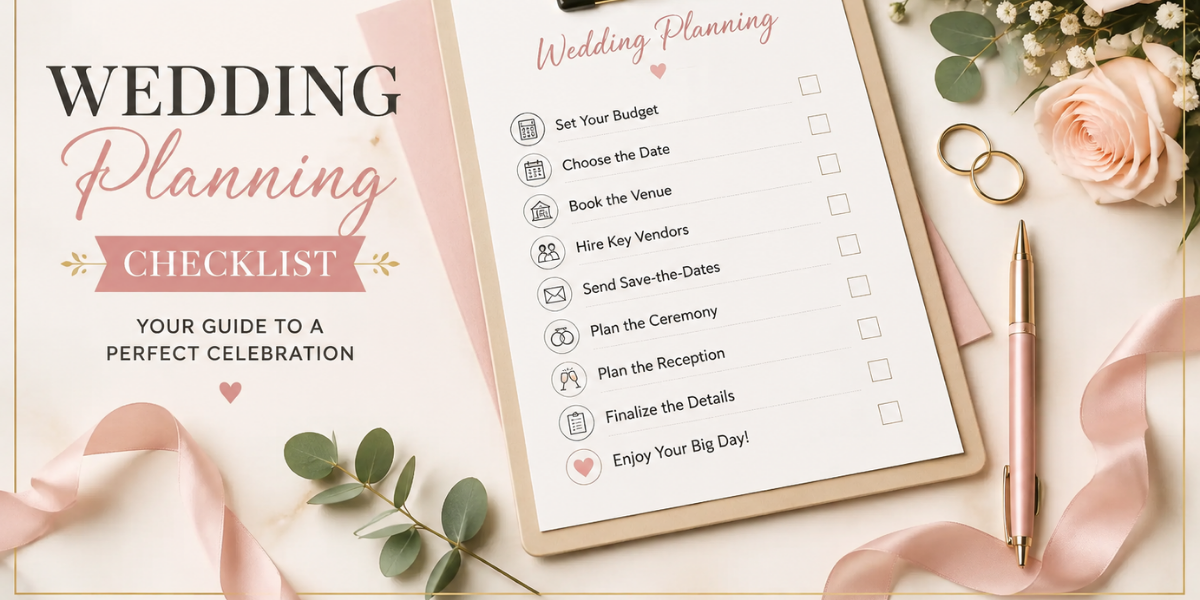
Planning a wedding is one of the most exciting experiences for a couple, but it can also feel overwhelming. From selecting the perfect venue and managing a budget to choosing vendors, sending invitations, and coordinating the wedding day, there are many details to consider. A clear Wedding Planning Guide can make the entire process more organized and enjoyable. Whether you are planning an intimate celebration, a destination wedding, or a large formal event, having a structured Wedding Checklist helps you stay on track and ensures important tasks are not overlooked. This step-by-step guide explains How to Plan a Wedding, from the first stages of setting your vision to the final details before walking down the aisle. Why Do You Need a Wedding Planning Checklist? A wedding involves many moving parts. Without proper organization, it can be easy to miss deadlines, overspend, or feel stressed by last-minute decisions. A structured Wedding Checklist helps couples: The key is to break the planning process into manageable stages rather than trying to organize everything at once. Step 1: Define Your Wedding Vision Before booking a venue or contacting vendors, take time to discuss your vision as a couple. Think about the type of celebration you want to create. Ask yourselves: Your answers will help guide future decisions. Choose Your Wedding Style Your wedding style can influence everything from the venue to the décor. Popular styles include: Creating an inspiration board can help organize your ideas and identify the design elements you love most. Step 2: Set Your Wedding Budget One of the first practical steps in How to Plan a Wedding is establishing a realistic budget. Your budget will influence many decisions, including: Start by identifying your overall budget and then divide it into categories. Example Wedding Budget Categories Category Planning Consideration Venue Ceremony and reception space Catering Food and beverages Photography Wedding photography and videography Decoration Flowers, furniture, lighting Entertainment DJ, band, performers Attire Wedding outfits and accessories Stationery Invitations and signage Transportation Couple and guest logistics Keep some flexibility in your budget for unexpected expenses. Step 3: Create Your Guest List Your guest count plays an important role in wedding planning. The number of guests can affect: Start by creating a preliminary list. You can divide guests into categories such as: Once you have an estimated number, it becomes easier to select an appropriate venue. Step 4: Choose Your Wedding Date Selecting a wedding date is an important milestone. Consider: It is also helpful to have a few alternative dates in case your preferred venue is unavailable. For destination weddings, allow additional time for travel planning and guest coordination. Step 5: Book Your Wedding Venue The venue provides the foundation for your entire celebration. When choosing a venue, consider both design and functionality. Important factors include: Location Choose a location that is convenient for you and your guests. Capacity Ensure there is enough space for your ceremony, reception, dining, and entertainment. Style The venue should complement your overall wedding vision. Services Ask what is included in the venue package. Some venues may provide: Always review the details carefully before making a final decision. Step 6: Hire Your Key Wedding Vendors Once the date and venue are confirmed, begin booking important vendors. Depending on your wedding, this may include: Popular vendors may have limited availability, so booking early can provide more options. Questions to Ask Vendors Before confirming a vendor, ask about: Clear communication from the beginning can help avoid misunderstandings later. Step 7: Choose Your Wedding Theme and Color Palette A cohesive design can make your wedding feel more visually organized. Start by selecting a general theme or design direction. Then choose a color palette that works across: You do not need to use too many colors. A refined palette can create a more elegant and consistent appearance. Step 8: Plan Your Wedding Decoration Wedding decoration helps transform a venue into a personalized celebration. Consider the following areas: Ceremony Décor Think about: Reception Décor Consider: Lighting Lighting can significantly influence the atmosphere. Options may include: A professional wedding decorator can help ensure that every element works together. Step 9: Select Your Wedding Attire Wedding attire is an important part of the celebration. Begin researching styles early so you have enough time for fittings and alterations. Consider: Comfort should also be considered, especially if you have a long wedding day. Step 10: Plan Your Wedding Ceremony The ceremony is one of the most meaningful parts of the day. Think about: Discuss the ceremony flow with your planner or officiant. A clear timeline helps ensure everyone understands their role. Step 11: Choose Your Wedding Menu Food is an important part of the guest experience. When planning your menu, consider: Possible dining formats include: Schedule a tasting session before finalizing the menu. Step 12: Book Entertainment Entertainment helps create the atmosphere of your celebration. Depending on your style, consider: Discuss your preferred music and important moments with the entertainment team. You may also want to create a list of: Step 13: Plan Your Wedding Photography and Videography Your wedding photographs and videos will preserve memories for years. When selecting professionals, review their portfolios carefully. Consider: Discuss important moments you want captured, but also allow photographers to document natural moments throughout the celebration. Step 14: Send Wedding Invitations Once the main details are confirmed, begin planning your invitations. Include essential information such as: For destination weddings, invitations may need to be sent earlier to give guests enough time to organize travel. Step 15: Create a Wedding Website or Information Page A wedding information page can make communication easier. You can include: This can be particularly helpful for destination weddings or multi-day celebrations. Step 16: Plan the Guest Experience A memorable wedding considers the guest journey from arrival to departure. Think about: Small details can make a significant difference. For example: The goal is to make guests feel welcomed and comfortable. Step 17: Create a Detailed Wedding Timeline A detailed timeline helps coordinate everyone involved in
Luxury Wedding Planning: A Complete Guide to Creating Your Dream Wedding
A wedding is one of life’s most meaningful celebrations, and for couples who want an extraordinary experience, every detail matters. From breathtaking venues and elegant floral arrangements to personalized guest experiences and exceptional entertainment, luxury weddings are designed to create unforgettable moments. However, creating a sophisticated celebration requires more than choosing expensive décor or a beautiful location. Successful Luxury Wedding Planning involves thoughtful design, detailed coordination, creativity, and a clear understanding of the couple’s vision. Whether you dream of an intimate destination celebration, a grand ballroom reception, or an elegant outdoor wedding, the right planning approach can transform your ideas into a seamless experience. In this guide, we explore inspiring Luxury Wedding Ideas, essential planning steps, and how Luxury Wedding Decoration can help create a celebration that feels elegant, personal, and unforgettable. What Is Luxury Wedding Planning? Luxury Wedding Planning is the process of designing and coordinating a high-end wedding experience with exceptional attention to detail, personalization, quality, and guest experience. A luxury wedding does not necessarily mean adding more of everything. Instead, it focuses on creating a cohesive and thoughtfully curated celebration. This may include: The goal is to ensure that every element works together to create a memorable atmosphere. Why Luxury Weddings Require Detailed Planning Luxury weddings often involve multiple vendors, detailed timelines, custom designs, and high expectations. Without proper planning, managing all these elements can become overwhelming. A structured planning process helps couples: Professional planning allows couples to focus on enjoying their celebration while experienced teams manage the behind-the-scenes coordination. Step 1: Define Your Luxury Wedding Vision Every successful wedding begins with a clear vision. Before choosing flowers, furniture, or entertainment, think about the overall experience you want to create. Ask yourself: Your answers can help shape the creative direction for the entire celebration. Create a Wedding Inspiration Board An inspiration board can help organize your Luxury Wedding Ideas. Include inspiration related to: The goal is not to copy every image you find. Instead, look for patterns that reflect your personal style. Step 2: Choose the Perfect Luxury Wedding Venue The venue creates the foundation for the entire wedding experience. A luxury venue should not only look beautiful but also support the practical requirements of your event. Consider: Location Choose a location that is convenient and appropriate for your guest list. For destination weddings, consider travel accessibility and accommodation options. Architecture The venue’s architectural style can influence your entire design concept. For example: Guest Capacity Make sure the venue can comfortably accommodate your ceremony, reception, dining arrangements, and entertainment. Flexibility Some venues provide more creative freedom than others. Ask whether you can customize: The right venue should support both your aesthetic vision and logistical requirements. Step 3: Set Priorities for Your Wedding Experience Every couple has different priorities. Some may care most about extraordinary Luxury Wedding Decoration, while others may focus on entertainment, food, photography, or guest experiences. Identify your highest priorities early in the planning process. For example: Experience-Focused Couples May prioritize: Design-Focused Couples May prioritize: Food-Focused Couples May prioritize: Clear priorities help guide planning decisions. Step 4: Create a Cohesive Luxury Wedding Design Luxury design is often about cohesion rather than simply selecting expensive elements. Every detail should contribute to a unified visual experience. Consider creating a design concept around: For example, a romantic luxury wedding may feature soft lighting, layered floral arrangements, elegant fabrics, and sophisticated tablescapes. A contemporary celebration may focus on architectural structures, clean lines, modern furniture, and dramatic lighting. Luxury Wedding Decoration Ideas Luxury Wedding Decoration plays a major role in transforming a venue into a personalized celebration space. Here are some ideas to consider. Statement Floral Installations Large-scale floral installations can create an impressive focal point. Options may include: Flowers can be designed to complement the overall color palette and atmosphere. Elegant Tablescapes The dining experience is an important visual element of the reception. Consider incorporating: Thoughtful tablescape design can make the reception feel more immersive. Custom Lighting Design Lighting can completely change the atmosphere of a wedding. Luxury lighting options may include: The right lighting can enhance both the décor and the overall guest experience. Personalized Wedding Details Personalization is one of the most meaningful aspects of luxury wedding design. Consider: Small details can make a celebration feel unique to the couple. Step 5: Choose Exceptional Wedding Vendors A luxury wedding often involves a team of specialists. Depending on your celebration, your vendor team may include: Choosing vendors who understand your vision is essential. When reviewing potential vendors, consider: Strong collaboration between vendors can make the planning process much smoother. Luxury Wedding Ideas for an Unforgettable Celebration If you’re looking for creative ways to elevate your wedding experience, consider these Luxury Wedding Ideas. 1. A Grand Wedding Entrance Create a memorable first impression with a carefully designed entrance. Ideas include: The entrance can immediately introduce guests to the atmosphere of the celebration. 2. Personalized Guest Experiences Luxury is often found in thoughtful experiences. Consider adding: These details can help guests feel valued throughout the event. 3. Live Entertainment Entertainment can transform the energy of a wedding. Options may include: Choose entertainment that matches the atmosphere you want to create. 4. Unique Ceremony Design The ceremony is the emotional center of the wedding. Consider creating a custom ceremony space with: A well-designed ceremony space can create unforgettable photographs and memories. 5. Bespoke Dining Experiences Food can become part of the overall wedding experience. Luxury dining ideas may include: The presentation should complement the overall event design. Step 6: Focus on the Guest Experience A truly memorable wedding considers how guests experience every stage of the celebration. Think about the complete guest journey. Before the Wedding Consider: Upon Arrival Create a welcoming experience through: During the Celebration Focus on: After the Wedding Thoughtful follow-up details can also create a lasting impression. Step 7: Plan the Perfect Wedding Timeline Luxury weddings often involve multiple events. A wedding weekend may include: Creating a detailed timeline helps ensure every event flows naturally. A